Hilo oficial del proyecto
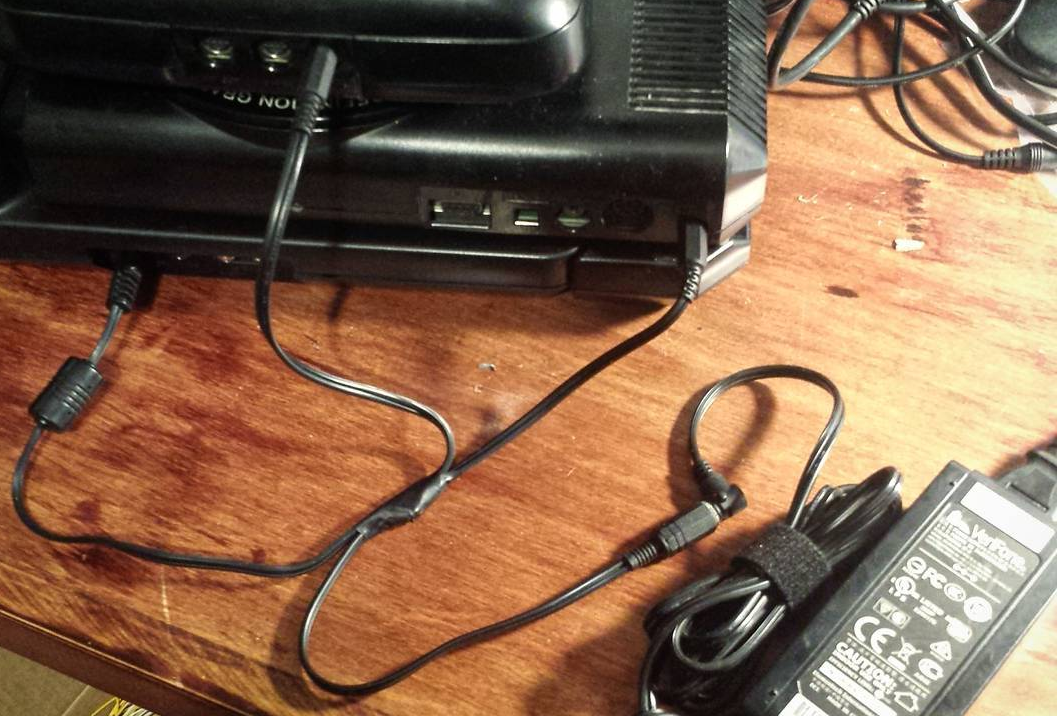

This new device is the creation of Arcade Projects forum member “Twisted Symphony”, who created the power source to solve the problems that having both of the Genesis add-on peripherals gives to the gamer. First off, having all three items plugged in takes an insane amount of physical room, since all three power supplies use a brick style, which when used with a standard power strip, can take as many as 3 outlet spaces due to their sizes. In addition, when using all three devices (especially at the same time), these stock power supplies can get physically hot to the touch, sometimes even when the console isn’t even turned on. This new creation solves all of these problems.
The first thing you may be thinking to yourself, is didn’t each device need a different amount of juice? Certainly you have heard of units becoming fried by using an improper combination of power supplies. Let’s start off by looking at what each device’s power supply, supplied:
Sega Genesis (Model 1): MX-1602 power supply rated for 9V at 1.2Amp
Sega CD (Model 2): MX-1602-1 power supply rated for 10V at 1.2Amp
Sega 32X: MX-2103 power supply rated for 10V at 0.85Amp
As you can see, while the Genesis uses a 9 volt power supply, the Sega CD and 32X both use a 10 volt supply, and while the Genesis and Sega CD require 1.2 Amps, the Sega CD only requires 0.85 Amps. According to the creator:
“The Official Sega Power Supplies tend to go between 9V and 10V. Putting my meter on the official Sega 1602 and 1602-1 Power supplys {sic} I found it to be outputting a whopping 13+V. The voltage really doesn’t matter though as the innards of these units have a power converter that drops the voltage down to the 5V necessary to run the actual main board. 10V supplies are fairly uncommon but 9V supplies are used quite a bit for a lot of electronics. So I wanted a 9V supply and I wanted something that could output at least 3.5Amps to cover the full rating of all the original supplies”
The project started out with a Verifone CPS10936-3F-R power supply, which is typically used for a POS system. The output of this particular supply is 9 volts and 4 Amps, which is acceptable for this type of project. This style of power supply is similar to what most laptop computers have today, which has a standard plug at the end, which would me much more convenient that what was originally offered by Sega. Instead of taking up to 6 outlets (again, due to the physical size of the plugs), this new item only takes a single outlet, no matter what type of outlet it’s plugged into.)
It was decided that the power supply itself should be completely unmodified, so that in the event of a failure, the brick itself could be easily exchanged. The three types of connectors that were required for the Sega systems, again, were all completely different, depending on the models of each system that you have. Let’s take a look:
Sega Genesis Model 1, Sega CD Models 1 & 2:
5.5mm outer diameter 2.1mm inner diameter male power connector
Sega Genesis Models 2 & 3, Sega 32X, CDX, JVC X’Eye:
4.8mm outer diameter 1.7mm inner diameter male power connector
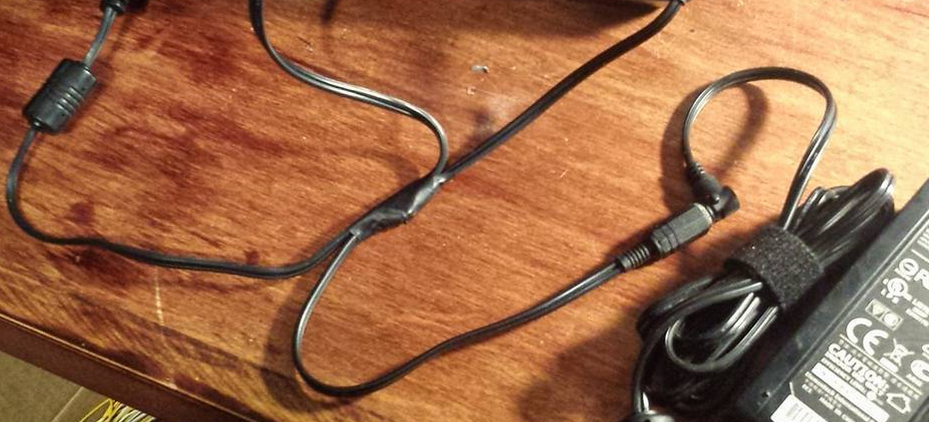
For the cord itself, the creator cut the AC power cord with 18 gauge wire, cutting it into four lengths which were then soldered onto the connectors on the end of each length, then soldering all of the other ends together. All of the wires were then taped together in a single spot. This was done as opposed to using a daisy chaining method to reduce the load. None of the wires that were custom cut are the same length, to prevent a shortage in the event that any two are unplugged. (This makes them less likely to accidentally rub against each other.) After everything was completed, the polarity was checked, to prevent a short, and after that vital check, it was time to put it up to the test.
The creator says that this new creation was a complete success, and does exactly what was planned. Now all three Sega systems can use the same power source, run more efficiently, and not run as hot. (And of course, only having to use a single power outlet doesn’t hurt either.) While the current version is only being held by electrical tape wrapped around at the site where all eight of the wires come together. it is planned to 3D print a small plastic shroud for this to make it look more clean.
Currently, this is a one of a kind original item, and there have not been any plans made to produce this to the masses. While other items of a similar nature have been made to tackle this problem, those with a little bit of experience with power supply repair might be able to create one of their very own for a cheaper price. Plus, you’d get to do it yourself, which is always a fun thing to do! The complete directions can be found on the Arcade Projects Forum link below.**
Dentro de mi ignorancia es chocante pensar en que un mod tan útil no se haya realizado antes, es muy posible que a nivel individual (ñapa) ciertos usuarios lo hayan hecho en su casa aunque sin llegar a divulgarlo.

Saludos